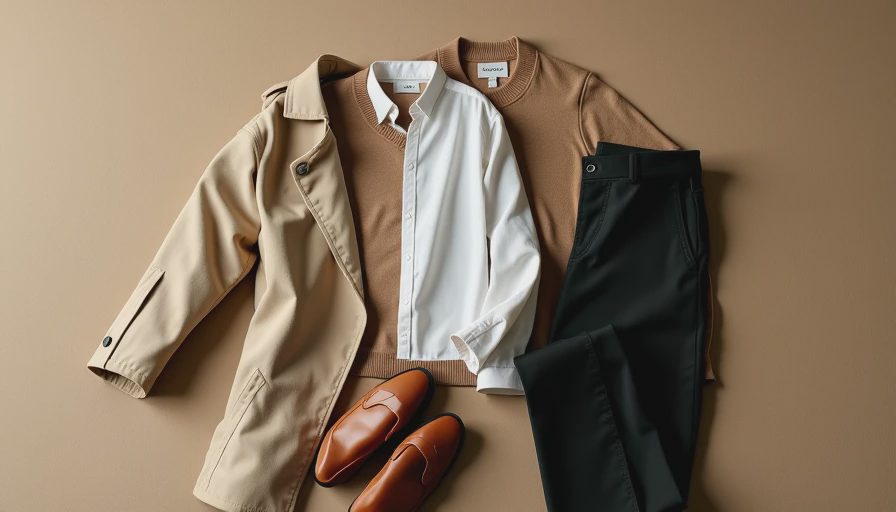
Living in Austin means I’ve become an expert in unpredictable weather. One day it’s 85°F and humid, the next morning it’s 55°F with wind. Transitional seasons used to stress me out until I developed reliable outfit formulas that adapt without requiring a full wardrobe overhaul.
These are my favorite formulas for those in-between months. They’re designed to handle temperature swings, unexpected rain, and the general chaos of real life while still looking intentionally polished.
1. The Layered Knit + Trench Formula
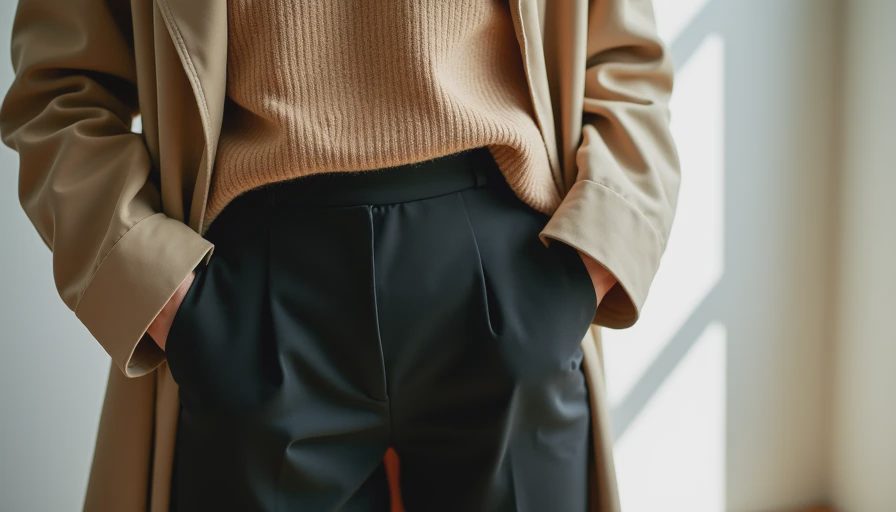
A lightweight merino or cotton-blend crewneck sweater layered under a lightweight trench coat or chore jacket, paired with straight or wide-leg trousers.
This is my MVP for transitional days. The knit keeps me warm in the morning chill, and the trench adds polish while protecting against wind or light rain. I can remove the outer layer as the day warms up and still look put-together. Add loafers or ankle boots depending on the forecast.
2. Shirt Dress + Denim Jacket Combo
A button-front shirt dress in breathable fabric with a classic denim jacket and comfortable sneakers or loafers.
The shirt dress works as a standalone piece when it gets warm, while the denim jacket handles cooler mornings and evenings. I love rolling the sleeves and adding a thin belt for shape. This formula feels effortless but reads as intentional.
3. Elevated Tee + Blazer + Wide-Leg Pants
A simple high-quality tee or lightweight long-sleeve top with a relaxed blazer and wide-leg trousers in a mid-weight fabric.
The blazer adds instant structure and polish that can be taken off if the afternoon heats up. Wide-leg pants give breathing room and look sharp whether layered or worn alone. This is my go-to for client meetings on unpredictable days.
4. Midi Skirt + Knit + Light Outer Layer
A structured midi skirt with a soft knit top (tucked or half-tucked) and a lightweight cardigan, trench, or denim jacket.
The skirt adds movement and femininity while the knit provides comfort. I can adjust layers throughout the day. This combination works beautifully for weekend activities or casual workdays.
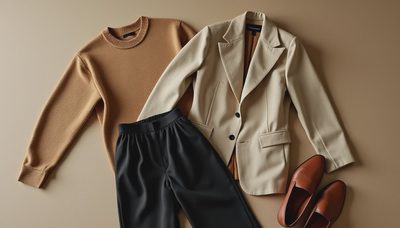
5. The Monochrome Transition Uniform
Head-to-toe in warm neutrals using different weights: a fine-gauge knit, mid-weight trousers, and a versatile jacket.
Monochrome makes mixing easy when you’re rushing out the door. I often wear this in camel or soft gray tones. Different textures (ribbed knit + smooth trousers + matte jacket) keep it interesting across temperature changes.
6. Jeans + Button-Down + Versatile Jacket
Dark jeans with a crisp button-down shirt and a lightweight blazer, chore jacket, or trench.
This formula bridges casual and polished perfectly. The button-down can be worn open as a light layer or fully buttoned depending on the temperature. Jeans provide reliability while the jacket handles the rest.
Bonus Tips for Transitional Dressing Success
Fabric strategy: Prioritize breathable mid-weight fabrics like cotton-linen blends, lightweight wool, Tencel, and merino. Avoid anything too heavy or too sheer.
Layering logic: Always have a removable outer layer that elevates the look rather than just adding warmth.
Shoe flexibility: Keep options like loafers, ankle boots, and clean sneakers ready. I often carry a second pair in the car during shoulder seasons.
Color consistency: Sticking mostly to neutrals makes layering foolproof and ensures everything mixes well.
Wearable beats impressive if impressive never leaves the closet.
These formulas have saved me countless mornings when the weather app couldn’t make up its mind. They prove you don’t need a separate wardrobe for every season — just smart, adaptable combinations.
How to Create Your Own Transitional Formulas
Look at your typical weather patterns and identify the most common temperature swings. Then audit your closet for pieces that layer well. Test combinations on low-stakes days and note what works.
A good wardrobe should make your mornings easier, not louder — especially when the weather is doing its own thing.
Try one of these formulas during the next transitional stretch. You’ll feel more prepared and polished even when the forecast is all over the place.
I’d love to hear how you handle transitional weather in your city. What’s your favorite layering trick or go-to formula? Share in the comments so we can all steal the best ideas.
No letters yet — be the first to write.